
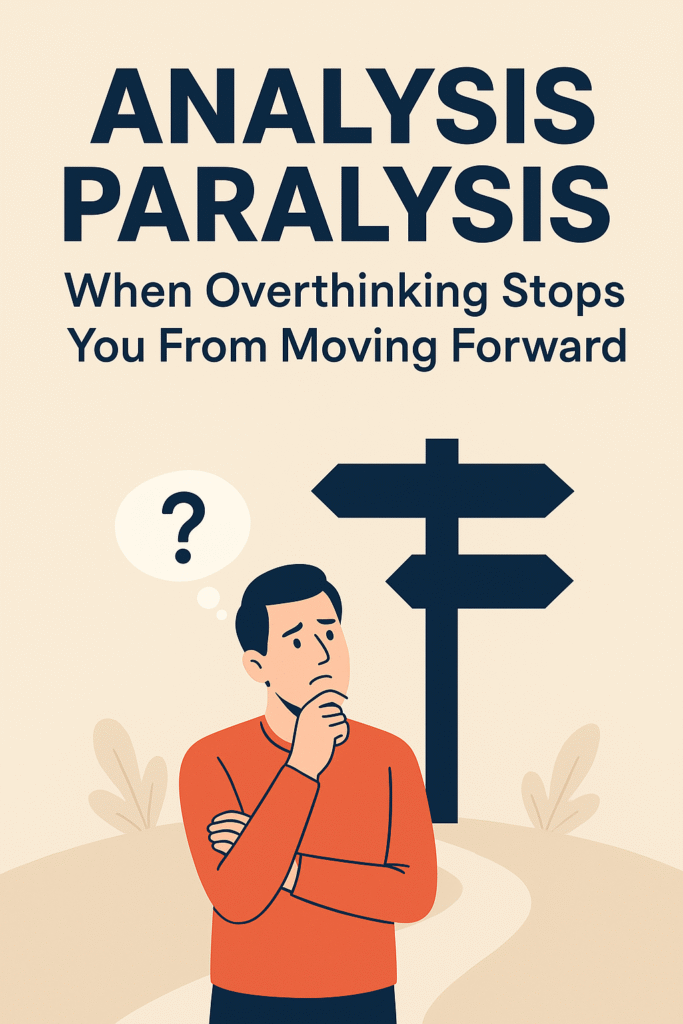
In a world filled with choices, information, and pressure to get everything right, many people fall into a mental trap known as analysis paralysis. This happens when a person thinks too much and ends up taking no action at all. Students deciding on a course, professionals planning a project, or even someone choosing what to eat can experience this moment of being stuck. Thinking is good, but too much thinking stops progress.
What Is Analysis Paralysis?
Analysis paralysis is the inability to make a decision because of excessive thinking. Instead of choosing a path, a person keeps collecting data, comparing options, and imagining different outcomes until nothing gets done. It is like standing at a crossroads, studying maps again and again, until you never take a step forward.
Why Does Analysis Paralysis Happen?
1. Fear of Making a Mistake
Some people want the perfect answer. They fear failure or criticism, so they keep delaying decisions.
2. Too Many Choices
Having more options may seem helpful, but in reality it can confuse the mind and make decision making harder.
3. Information Overload
With endless information online, people often feel unsure which details truly matter. This leads to doubt and inaction.
4. Lack of Confidence
People who question their own abilities tend to overthink, hesitate, and avoid taking the next step.
Effects of Analysis Paralysis
- Missed opportunities
- Increased stress and worry
- Lower productivity
- Loss of creativity and motivation
Overthinking drains time and energy. Instead of moving forward, a person becomes stuck in the same place.
How To Overcome Analysis Paralysis
1. Set a Decision Deadline
Choose a specific time to make your final decision. When the time is up, commit to the best option available.
2. Accept That Good Enough Is Better Than Perfect
Perfection is often impossible. A workable solution is usually enough to start progress.
3. Limit Your Options
Choose only the top two or three choices to consider. Fewer options mean easier decisions.
4. Trust Your Instincts
Your experiences shape your intuition. Many times, your first feeling is already correct.
5. Take Small Steps
Start with simple actions. Movement creates clarity and confidence.
6. Embrace Mistakes as Learning
Every mistake teaches something valuable. Progress will always be more important than perfection.
Conclusion
Analysis paralysis stops people from achieving goals, exploring opportunities, and moving toward success. The key is to balance thinking with action. Your choices do not need to be perfect. They only need to be made. When you let go of fear and begin with small steps, you transform overthinking into real progress.