
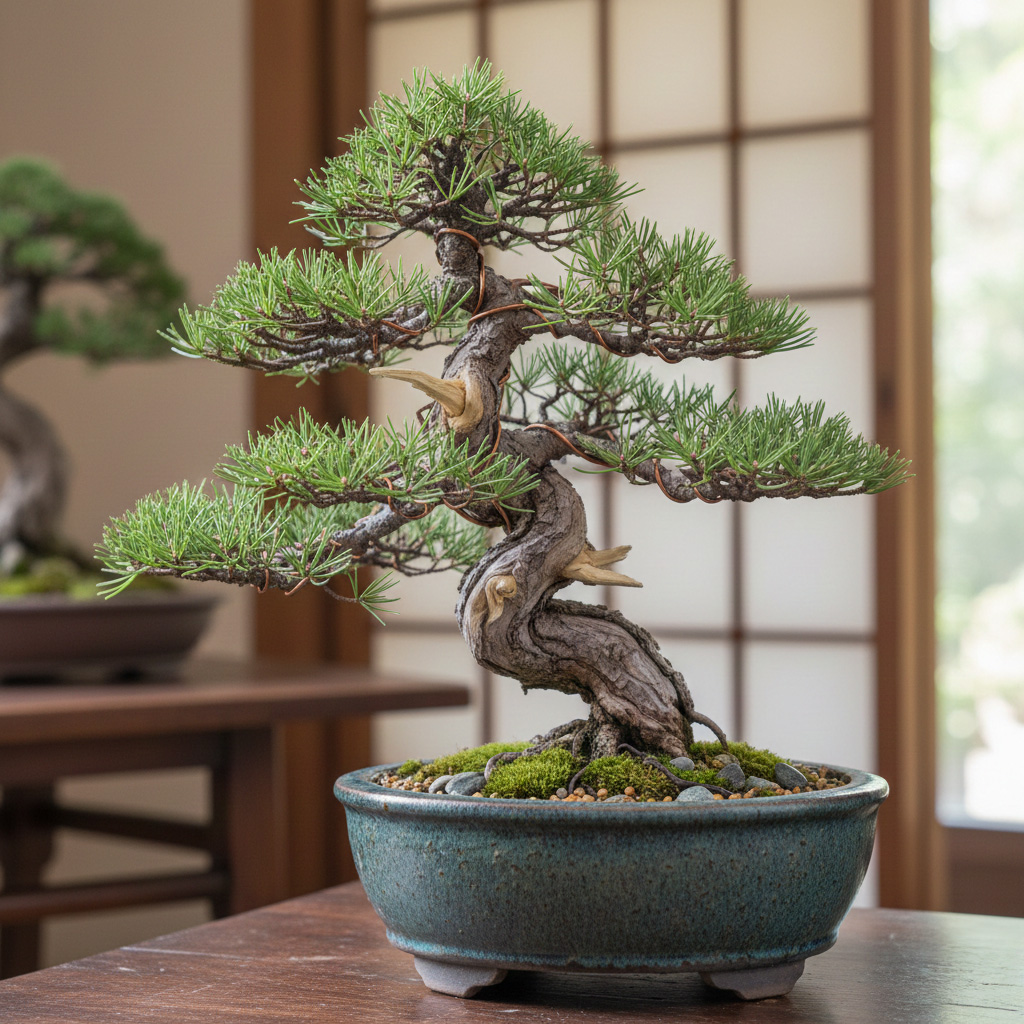
Bonsai, the ancient art of cultivating miniature trees in containers, is more than just a horticultural practice; it’s a journey of patience, mindfulness, and artistic expression. Originating in China and refined in Japan, bonsai embodies the profound connection between humans and nature. Whether you’re a seasoned gardener or a complete novice, embarking on the bonsai path can be a rewarding and enriching experience. This comprehensive guide will provide you with the knowledge and techniques you need to cultivate your own miniature masterpieces.
Understanding the Fundamentals of Bonsai
Before diving into the practical aspects of bonsai, it’s crucial to understand the core principles that underpin this art form. Bonsai aims to replicate the essence of mature trees in a scaled-down format, capturing their natural beauty and resilience. This is achieved through a combination of careful pruning, wiring, and repotting techniques.
The Aesthetic Principles of Bonsai
Bonsai aesthetics are deeply rooted in Zen philosophy and the appreciation of imperfection and asymmetry. Key elements include:
-
- Trunk Line: The shape and character of the trunk are paramount, reflecting age, strength, and resilience. Look for interesting curves, twists, and taper.
- Trunk Line: The shape and character of the trunk are paramount, reflecting age, strength, and resilience. Look for interesting curves, twists, and taper.
-
- Branch Arrangement: Branches should be arranged to create a balanced and harmonious composition, mimicking the natural growth patterns of trees in the wild. Avoid symmetrical or overly crowded branching.
- Branch Arrangement: Branches should be arranged to create a balanced and harmonious composition, mimicking the natural growth patterns of trees in the wild. Avoid symmetrical or overly crowded branching.
-
- Root Spread: The roots should be visible and well-distributed around the base of the trunk, providing a sense of stability and age.
- Root Spread: The roots should be visible and well-distributed around the base of the trunk, providing a sense of stability and age.
-
- Container Selection: The pot is an integral part of the overall design, complementing the tree’s style, shape, and color.
- Container Selection: The pot is an integral part of the overall design, complementing the tree’s style, shape, and color.
-
- Negative Space: The empty spaces between branches and foliage are just as important as the tree itself, creating a sense of depth and openness.
- Negative Space: The empty spaces between branches and foliage are just as important as the tree itself, creating a sense of depth and openness.
Choosing the Right Tree for Bonsai
Selecting the appropriate tree species is a critical first step in your bonsai journey. While many trees can be adapted for bonsai, some are more suitable than others. Consider the following factors:
-
- Hardiness: Choose a tree that can tolerate your local climate and growing conditions.
- Hardiness: Choose a tree that can tolerate your local climate and growing conditions.
-
- Growth Habit: Trees with naturally small leaves and compact growth are generally easier to train as bonsai.
- Growth Habit: Trees with naturally small leaves and compact growth are generally easier to train as bonsai.
-
- Branching Structure: Trees with flexible branches are more amenable to wiring and shaping.
- Branching Structure: Trees with flexible branches are more amenable to wiring and shaping.
-
- Availability: Select a species that is readily available from nurseries or garden centers in your area.
- Availability: Select a species that is readily available from nurseries or garden centers in your area.
Popular bonsai species include:
-
- Japanese Maple (Acer palmatum): Prized for its stunning foliage and vibrant autumn colors.
- Japanese Maple (Acer palmatum): Prized for its stunning foliage and vibrant autumn colors.
-
- Juniper (Juniperus species): Highly adaptable and tolerant of harsh conditions, making it a good choice for beginners.
- Juniper (Juniperus species): Highly adaptable and tolerant of harsh conditions, making it a good choice for beginners.
-
- Pine (Pinus species): Known for their rugged beauty and distinctive needle patterns.
- Pine (Pinus species): Known for their rugged beauty and distinctive needle patterns.
-
- Ficus (Ficus retusa): A tropical species that is easy to care for indoors.
- Ficus (Ficus retusa): A tropical species that is easy to care for indoors.
-
- Azalea (Rhododendron species): Offers beautiful spring blooms and interesting trunk shapes.
- Azalea (Rhododendron species): Offers beautiful spring blooms and interesting trunk shapes.
Essential Bonsai Techniques
Mastering the essential bonsai techniques is crucial for maintaining the health and aesthetic appeal of your trees. These techniques include pruning, wiring, repotting, and watering.
Pruning: Shaping and Maintaining Your Bonsai
Pruning is the most important technique in bonsai cultivation. It is used to control the size and shape of the tree, encourage branching, and remove unwanted growth. There are two main types of pruning:
-
- Structural Pruning: This involves removing large branches to establish the basic shape of the tree. It is typically done in the late winter or early spring before new growth emerges.
- Structural Pruning: This involves removing large branches to establish the basic shape of the tree. It is typically done in the late winter or early spring before new growth emerges.
-
- Maintenance Pruning: This involves removing new growth and pinching back shoots to maintain the tree’s shape and density. It is typically done throughout the growing season.
- Maintenance Pruning: This involves removing new growth and pinching back shoots to maintain the tree’s shape and density. It is typically done throughout the growing season.
Example: To encourage back budding on a juniper, pinch back the new growth at the tips of the branches with your fingers. This will force the tree to produce new shoots further back on the branches, creating a denser and more compact appearance.
Wiring: Guiding the Growth of Branches
Wiring is used to bend and shape branches into desired positions. It involves wrapping aluminum or copper wire around the branches and gently bending them into place.
-
- Aluminum Wire: Softer and easier to work with, but less durable than copper wire.
- Aluminum Wire: Softer and easier to work with, but less durable than copper wire.
-
- Copper Wire: Stronger and more durable, but requires more skill to apply.
- Copper Wire: Stronger and more durable, but requires more skill to apply.
Example: To wire a branch, start by anchoring the wire securely to the trunk or a larger branch. Then, wrap the wire around the branch at a 45-degree angle, being careful not to damage the bark. Bend the branch gently into the desired position and secure the end of the wire.
Repotting: Renewing the Soil and Root System
Repotting is necessary to replenish the soil, trim the roots, and provide the tree with a fresh growing medium. It is typically done every 2-3 years for young trees and every 3-5 years for older trees.
-
- Soil Composition: Bonsai soil should be well-draining and retain moisture. A common mix includes akadama, pumice, and lava rock.
- Soil Composition: Bonsai soil should be well-draining and retain moisture. A common mix includes akadama, pumice, and lava rock.
-
- Root Pruning: Carefully prune the roots, removing any circling, crossing, or dead roots. Aim to reduce the root ball by about one-third.
- Root Pruning: Carefully prune the roots, removing any circling, crossing, or dead roots. Aim to reduce the root ball by about one-third.
Example: When repotting a bonsai, carefully remove the tree from its pot and gently loosen the soil around the roots. Use a root hook or chopsticks to tease apart the roots and remove any dead or decaying material. Trim the roots with sharp scissors or root pruners, ensuring that you leave enough roots to support the tree.
Watering and Fertilizing Your Bonsai
Proper watering and fertilization are essential for the health and vigor of your bonsai.
-
- Watering: Water thoroughly when the soil surface is dry to the touch. Avoid overwatering, which can lead to root rot.
- Watering: Water thoroughly when the soil surface is dry to the touch. Avoid overwatering, which can lead to root rot.
-
- Fertilizing: Fertilize regularly during the growing season with a balanced fertilizer. Use a diluted solution to avoid burning the roots.
- Fertilizing: Fertilize regularly during the growing season with a balanced fertilizer. Use a diluted solution to avoid burning the roots.
Example: A good way to check if your bonsai needs watering is to insert your finger into the soil up to the first knuckle. If the soil feels dry, it’s time to water. Water slowly and thoroughly until water drains out of the drainage holes in the bottom of the pot.
Styling Your Bonsai: Exploring Different Forms
Bonsai styling involves shaping the tree into one of several traditional forms, each with its own unique characteristics. Some common bonsai styles include:
-
- Formal Upright (Chokkan): A straight, upright trunk with symmetrical branching.
- Formal Upright (Chokkan): A straight, upright trunk with symmetrical branching.
-
- Informal Upright (Moyogi): A slightly curved trunk with asymmetrical branching.
- Informal Upright (Moyogi): A slightly curved trunk with asymmetrical branching.
-
- Slanting (Shakan): A trunk that leans to one side, suggesting wind or environmental stress.
- Slanting (Shakan): A trunk that leans to one side, suggesting wind or environmental stress.
-
- Cascade (Kengai): A trunk that grows downward, cascading over the edge of the pot.
- Cascade (Kengai): A trunk that grows downward, cascading over the edge of the pot.
-
- Semi-Cascade (Han Kengai): A trunk that grows downward but does not reach below the bottom of the pot.
- Semi-Cascade (Han Kengai): A trunk that grows downward but does not reach below the bottom of the pot.
-
- Literati (Bunjin): An elegant and minimalist style with a slender, often contorted trunk and sparse foliage.
- Literati (Bunjin): An elegant and minimalist style with a slender, often contorted trunk and sparse foliage.
Choosing a style depends on the species of tree, its natural growth habit, and your personal preferences.
Common Bonsai Problems and Solutions
Even with proper care, bonsai trees can sometimes encounter problems. Here are some common issues and their solutions:
-
- Yellowing Leaves: Can be caused by overwatering, underwatering, nutrient deficiencies, or pests. Adjust your watering schedule, fertilize regularly, and inspect for pests.
- Yellowing Leaves: Can be caused by overwatering, underwatering, nutrient deficiencies, or pests. Adjust your watering schedule, fertilize regularly, and inspect for pests.
-
- Root Rot: Caused by overwatering and poor drainage. Repot the tree in fresh soil and improve drainage.
- Root Rot: Caused by overwatering and poor drainage. Repot the tree in fresh soil and improve drainage.
-
- Pests: Common pests include aphids, spider mites, and scale. Treat infestations with insecticidal soap or horticultural oil.
- Pests: Common pests include aphids, spider mites, and scale. Treat infestations with insecticidal soap or horticultural oil.
-
- Branch Dieback: Can be caused by fungal diseases or improper pruning. Remove dead branches and apply a fungicide if necessary.
- Branch Dieback: Can be caused by fungal diseases or improper pruning. Remove dead branches and apply a fungicide if necessary.
The Rewarding Journey of Bonsai
Cultivating bonsai is a journey of continuous learning and refinement. It requires patience, dedication, and a willingness to experiment. As you develop your skills, you’ll gain a deeper appreciation for the beauty and resilience of nature. Bonsai is not just about creating miniature trees; it’s about cultivating a connection with the natural world and fostering a sense of inner peace and tranquility. Embrace the process, enjoy the challenges, and celebrate the beauty of your bonsai creations.
Frequently Asked Questions (FAQs)
1. How often should I water my bonsai?
Water your bonsai when the soil surface is dry to the touch. The frequency will depend on the species, the size of the pot, and the climate. Generally, this means watering every 1-3 days.
2. What type of soil should I use for bonsai?
Bonsai soil should be well-draining and retain moisture. A common mix includes akadama, pumice, and lava rock.
3. How often should I fertilize my bonsai?
Fertilize regularly during the growing season (spring and summer) with a balanced fertilizer. Use a diluted solution to avoid burning the roots.
4. How often should I repot my bonsai?
Repot young trees every 2-3 years and older trees every 3-5 years.
5. What is wiring used for in bonsai?
Wiring is used to bend and shape branches into desired positions.
6. What are some common mistakes beginners make with bonsai?
Common mistakes include overwatering, underwatering, improper pruning, and using the wrong type of soil.
7. Where is the best place to keep my bonsai?
This depends on the species. Generally, outdoor bonsai need to be in a location that receives adequate sunlight and protection from extreme weather. Indoor bonsai need bright, indirect light.