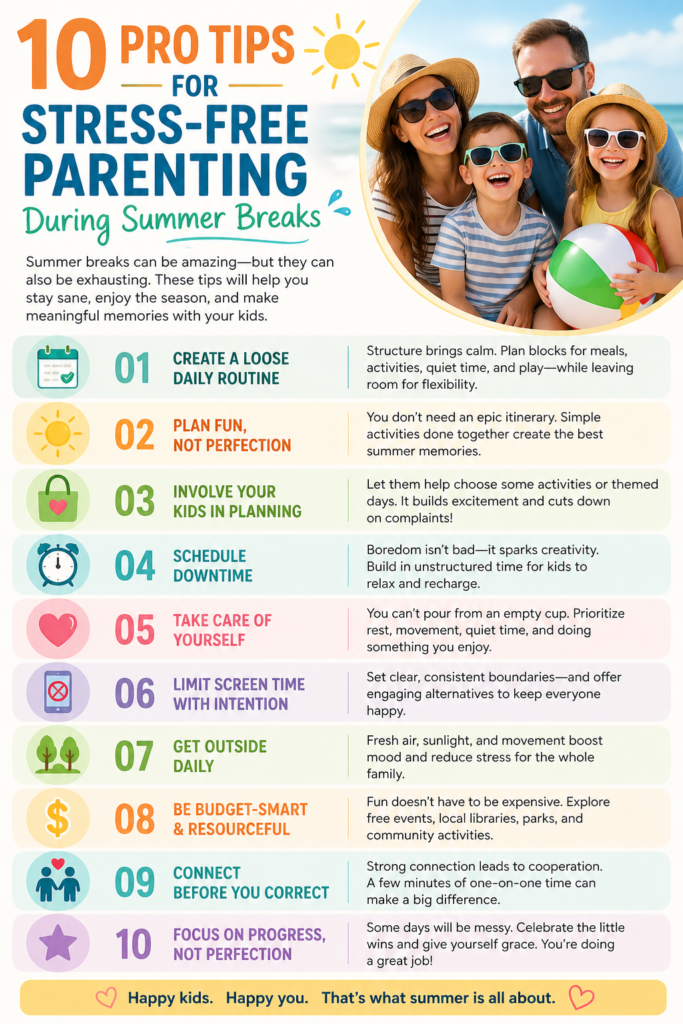
Surviving and Thriving: Parenting During Summer Breaks
Summer break is often met with a mix of excitement and trepidation by parents. While the thought of no school runs, no homework, and lazy mornings is initially appealing, the reality of keeping children entertained for eight to ten weeks can be overwhelming. Parenting during summer breaks requires a unique blend of creativity, patience, and organization. Without the structure of the school day, children can quickly become restless, leading to increased screen time, sibling rivalry, and parental burnout. However, with the right approach, summer can be a time of profound growth and connection for the entire family.
The transition from a highly structured academic environment to the freedom of summer is a significant shift for children. They lose their daily social interactions, their intellectual stimulation, and their predictable routine. As a parent, your role shifts from being a supportive coach to becoming a cruise director, educator, and mediator all at once. This guide is designed to provide you with actionable strategies to navigate these months successfully, ensuring that both you and your children emerge from the summer feeling refreshed rather than exhausted.
1. The Power of a Flexible Routine
One of the biggest mistakes parents make is abandoning all structure as soon as the final school bell rings. While it is tempting to let everyone sleep in and go with the flow, a total lack of routine often leads to behavioral issues. Children thrive on predictability; knowing what comes next helps them feel secure and reduces anxiety. However, the key to parenting during summer breaks is flexibility. You don’t need a minute-by-minute itinerary, but a loose framework for the day can work wonders.

Creating a Visual Calendar
A visual calendar is an excellent tool for managing expectations. Use a large whiteboard or a wall calendar to map out the week. Include major events like camp days, doctor appointments, or family outings, but also include ‘theme days.’ For example, ‘Make-it Monday’ for crafts, ‘Trip Tuesday’ for local park visits, and ‘Water Wednesday’ for the pool or sprinklers. When children can see what is planned, they are less likely to ask ‘what are we doing today?’ every five minutes.
Setting Daily Expectations
Even on days with no set plans, establish a ‘morning checklist.’ This might include getting dressed, making the bed, and completing one chore before any electronics are allowed. By setting these expectations early, you instill a sense of responsibility and ensure that the basic necessities of the household are met before the day’s fun begins.

2. Combating the Summer Slide
The ‘summer slide’ refers to the loss of academic skills that can occur when children are away from the classroom for an extended period. While summer should be a break from formal testing, it shouldn’t be a break from learning. Parenting during summer breaks involves finding ways to keep young minds active without making it feel like ‘work.’
Incorporating Stealth Learning
Stealth learning is the art of integrating educational concepts into everyday activities. Cooking is a prime example; it involves math (measuring ingredients), science (chemical reactions during baking), and reading (following a recipe). Gardening can teach biology and responsibility, while a trip to the grocery store can be a lesson in budgeting and mental math. By framing these activities as fun family projects, you keep their brains engaged without the resistance often associated with schoolwork.

The Summer Reading Challenge
Make the local library your best friend. Most libraries offer summer reading programs with incentives and prizes. Set a family reading goal and dedicate a specific time each day—perhaps right after lunch when the sun is at its hottest—as ‘quiet reading time.’ This not only maintains literacy skills but also provides a necessary period of calm in an otherwise hectic day.
3. Balancing Professional Responsibilities and Family Time
For many parents, summer break doesn’t mean a break from work. Managing a career while parenting during summer breaks is one of the most significant challenges of modern adulthood. If you work from home, the presence of children can make productivity feel impossible.
The Early Bird Strategy
If your children tend to sleep in during the summer, use those early morning hours to tackle your most demanding work tasks. Getting two hours of focused work done before the house wakes up can significantly reduce your stress levels for the rest of the day. Alternatively, if you have a partner, consider ‘shift parenting,’ where one person works in the morning while the other handles the kids, and then you swap in the afternoon.
Setting Physical Boundaries
Children need to understand when you are ‘at work.’ If you have a home office, use a visual cue—like a sign on the door or a specific hat you wear—to signal that you are not to be interrupted unless there is an emergency. Provide them with a ‘boredom jar’ filled with activity ideas they can do independently while you finish your tasks. Remember to reward their patience with 15-20 minutes of undivided attention once your work block is over.
4. Embracing the Great Outdoors
Physical activity is essential for burning off the boundless energy children seem to possess. Nature also has a documented calming effect on the human brain. Use the summer months to reconnect with the environment and encourage your children to step away from their devices.
Nature as a Classroom
Turn a simple walk in the woods into a scavenger hunt. Look for specific types of leaves, insects, or rocks. Use apps to identify local flora and fauna. These activities promote physical health while fostering a sense of wonder and appreciation for the world around them. Outdoor play also helps regulate sleep patterns, as exposure to natural light and physical exertion makes for easier bedtimes.
Physical Health and Well-being
Encourage ‘old-school’ play. Activities like riding bikes, jumping rope, or playing tag are not only fun but vital for motor skill development. If the heat is too intense, look for indoor alternatives like community center gyms or indoor climbing walls. The goal is to ensure that ‘parenting during summer breaks’ includes at least sixty minutes of heart-pumping activity every day.
5. Navigating the Digital Landscape
It is unrealistic to expect a screen-free summer in the 21st century. However, without school to fill their time, children can easily spend eight hours a day on tablets or gaming consoles. Managing screen time is a critical component of parenting during summer breaks.
Establishing Screen Time Contracts
Sit down with your children at the start of the summer and negotiate a screen time contract. This contract should outline how much time is allowed and, more importantly, what must be done to earn that time. For instance, an hour of outdoor play plus thirty minutes of reading might equal one hour of gaming. When the rules are clear and agreed upon in advance, it eliminates the daily arguments over devices.
Quality Over Quantity
Not all screen time is created equal. Encourage your children to use technology for creative purposes, such as learning to code, editing videos, or digital drawing. Co-playing a video game or watching a family movie together can also turn a solitary activity into a bonding experience. The goal is to move from passive consumption to active engagement.
6. Prioritizing Parental Self-Care
You cannot pour from an empty cup. Parenting during summer breaks is a marathon, not a sprint, and if you don’t take care of yourself, you will eventually hit a wall. Burnout leads to irritability, which in turn affects the atmosphere of the entire home.
Finding Your Village
Don’t try to do it all alone. Coordinate with other parents to arrange ‘playdate swaps.’ You take their kids for four hours on Wednesday, and they take yours on Thursday. This gives each parent a guaranteed block of time to run errands, work, or simply rest. Community is the best antidote to the isolation that summer parenting can sometimes bring.
The Importance of ‘Me Time’
Schedule time for your own hobbies and relaxation. Whether it’s a morning yoga session, an evening walk, or simply sitting in a quiet room with a cup of coffee, these moments of solitude are essential for maintaining your mental health. Explain to your children that just as they need time to play, you need time to recharge. Modeling self-care is one of the most valuable lessons you can teach them.
Conclusion: Making Memories That Last
As the weeks of summer pass by, it is easy to get caught up in the stress of the mess, the noise, and the constant demands for snacks. However, it is important to remember that these years are fleeting. Parenting during summer breaks is not just about survival; it is about creating the ‘magic’ that your children will look back on with fondness in adulthood. It’s the late-night stargazing, the messy science experiments in the kitchen, and the spontaneous trips for ice cream that they will remember—not the perfectly clean house or the strict adherence to a schedule.
By implementing a flexible routine, keeping their minds active, balancing your work life, and prioritizing your own well-being, you can transform the summer from a period of stress into a season of joy. Embrace the chaos, find the humor in the small disasters, and take the time to truly see and hear your children. With these tips and tricks, you are well on your way to a successful, memorable, and stress-free summer break.