
Introduction: The New Era of Digital Ecosystems
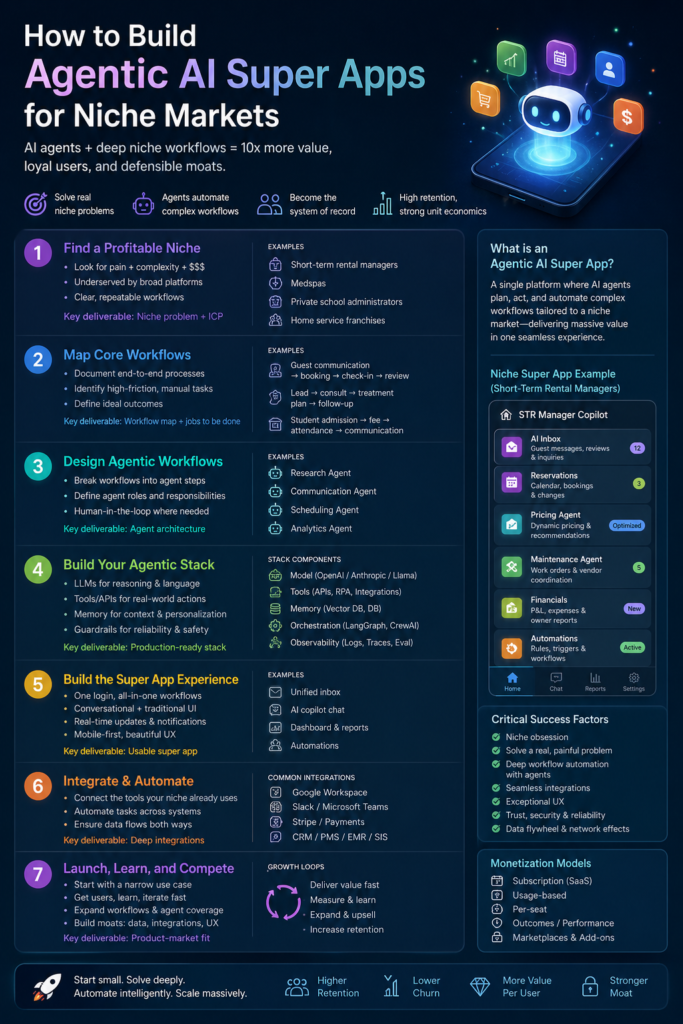
The digital landscape is undergoing a seismic shift. We are moving away from fragmented single-purpose applications toward cohesive, intelligent ecosystems. For developers and entrepreneurs at jecoaff.com, staying ahead means understanding how to weave together disparate technologies into a seamless user experience. The rise of agentic AI integration and the demand for cross-platform super apps have created a unique opportunity for those looking to dominate niche markets. In this guide, we will explore the technical and strategic steps required to build a modern super app that leverages real-time data, automated workflows, and strict regulatory compliance.
Step 1: Leveraging Agentic AI Integration and Low-Code Tools
Traditional AI provides answers; agentic AI takes action. Integrating agentic AI into your platform allows the system to perform complex tasks on behalf of the user, such as managing schedules, executing trades, or optimizing logistics. To begin, developers should focus on agentic AI integration through robust frameworks like LangChain or AutoGPT, which allow AI agents to interact with external APIs.
However, building these systems from scratch can be resource-intensive. This is where low-code internal tools come into play. By using low-code platforms, your team can rapidly prototype administrative dashboards and internal management systems. This reduces the time-to-market and allows your core engineering talent to focus on the high-level logic of the AI agents rather than basic UI components. Low-code solutions also facilitate easier iteration, which is crucial when fine-tuning how an AI agent interacts with your user base.
Benefits of a Low-Code Foundation:
- Rapid deployment of internal monitoring systems.
- Reduced overhead for non-technical staff to manage data.
- Easier integration with legacy databases and third-party services.
Step 2: Architecture for Cross-Platform Super Apps
A super app is more than just a collection of features; it is a unified gateway to multiple services. To build successful cross-platform super apps, you must adopt a micro-frontend architecture. This allows different teams to work on different ‘mini-apps’ within the main ecosystem—such as a payment module, a social feed, or a booking system—without interfering with the core codebase.
For niche markets, the value proposition often lies in specific utility. For instance, integrating a real-time sports booking API can transform a generic fitness app into a comprehensive niche community platform for athletes. This API allows users to view court availability, book sessions, and pay instantly, all within the same interface. Ensuring that these interactions happen in real-time is vital for maintaining user trust and operational efficiency.
Step 3: Navigating Philippine Fintech Compliance
If your super app involves transactions, especially in the Southeast Asian market, understanding Philippine fintech compliance is non-negotiable. The Bangko Sentral ng Pilipinas (BSP) and the Securities and Exchange Commission (SEC) have strict guidelines regarding digital payments, data privacy, and Anti-Money Laundering (AML) protocols.
To ensure compliance, your platform must implement:
- Know Your Customer (KYC): Automated identity verification processes to prevent fraud.
- Data Privacy: Adherence to the Data Privacy Act of 2012, ensuring all user data is encrypted and handled ethically.
- Transaction Monitoring: Systems that flag suspicious activity in real-time to meet AML requirements.
Failing to meet these standards can lead to heavy fines or the revocation of operating licenses. Integrating compliant payment gateways early in the development cycle is a strategic necessity for any fintech-adjacent super app.
Step 4: Mastering Generative Engine Optimization (GEO)
As AI search engines like Perplexity, ChatGPT, and Gemini become the primary way users find information, traditional SEO is no longer enough. You must now focus on generative engine optimization (GEO). This involves structuring your content so that AI models can easily parse, cite, and recommend your services.
To optimize for generative engines:
- Use clear, authoritative language that establishes your platform as a thought leader.
- Structure data using Schema markup to help AI understand the context of your offerings.
- Create high-value resources, such as automated workflow ebooks, that AI engines can reference when users ask for ‘how-to’ advice in your niche.
By positioning your brand as the primary source of information for your niche, you ensure that your super app remains the top recommendation when users interact with AI assistants.
Step 5: Scaling with Hyper-Personalized Digital Products
The ultimate goal of any super app is to provide hyper-personalized digital products. By analyzing user behavior through your AI agents, you can offer tailored recommendations that feel intuitive rather than intrusive. For example, if a user frequently uses the real-time sports booking API to reserve tennis courts, the app could automatically suggest AI-powered learning modules on tennis techniques or offer a discount on sports gear through an affiliate link.
Personalization is driven by data. However, it must be balanced with transparency. Users are more likely to engage with hyper-personalized features if they understand how their data is being used to improve their experience. This builds long-term loyalty and increases the lifetime value of each user within your niche community platforms.
Step 6: Building and Monetizing Niche Community Platforms
Generic social networks are losing ground to specialized communities. By focusing on a niche—whether it is local sports, fintech enthusiasts, or professional developers—you can create a ‘moat’ around your business. Your super app should serve as the central hub for these communities.
Monetization strategies for these platforms include:
- Subscription models for premium AI-powered learning modules.
- Transaction fees from the real-time sports booking API.
- Lead generation through automated workflow ebooks and specialized whitepapers.
- In-app marketplaces for hyper-personalized digital products.
By providing a platform where users can learn, transact, and interact, you create a sticky ecosystem that is difficult for competitors to replicate.
Conclusion: The Future of Integrated AI Solutions
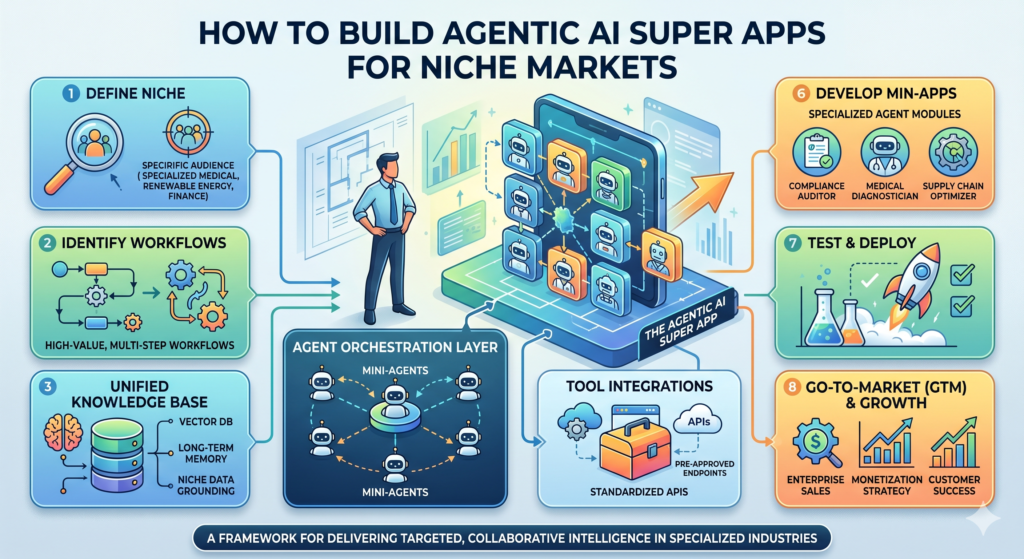
Building a modern super app requires a multi-faceted approach. By combining agentic AI integration with low-code internal tools, you can build a flexible and powerful backend. By focusing on cross-platform super apps that cater to niche community platforms, you address specific market needs that large-scale generic apps often overlook. Finally, by staying ahead of Philippine fintech compliance and mastering generative engine optimization, you ensure that your platform is both legally sound and highly visible in the age of AI.
At jecoaff.com, we believe that the integration of these technologies is not just a trend but the future of digital commerce. Start small, focus on your niche, and use the power of AI to create a truly hyper-personalized experience for your users. The tools are available; the roadmap is clear. Now is the time to build.
