
The Dawn of Agentic AI Integration in Modern Ecosystems
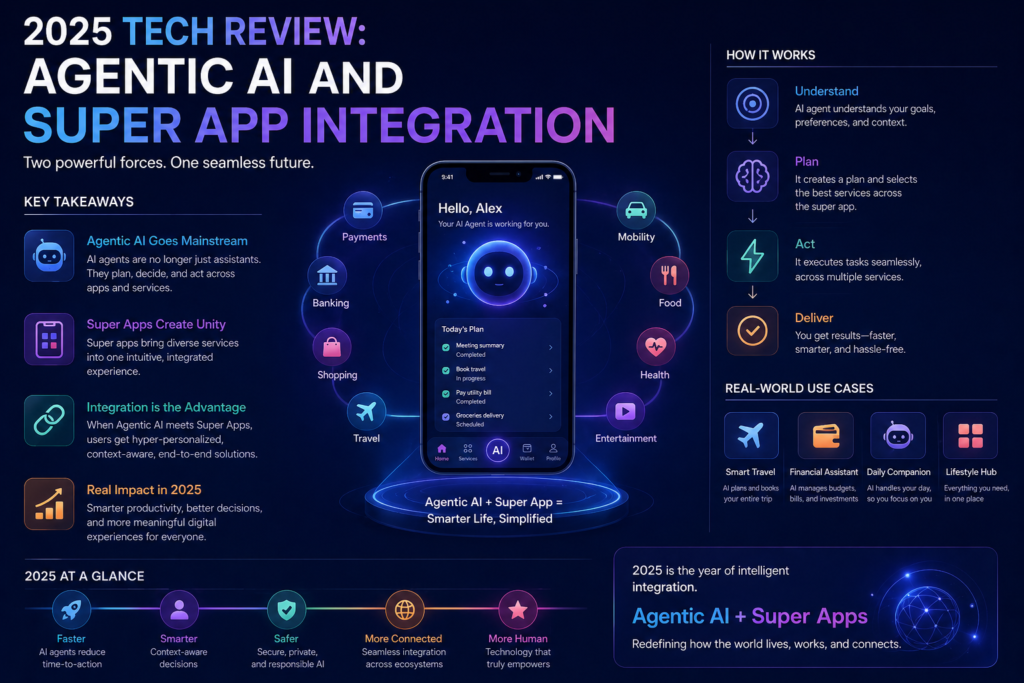
As we navigate through 2024 and look toward 2025, the digital landscape is undergoing a tectonic shift. We are moving beyond simple chatbots and predictive text into an era defined by agentic AI integration. Unlike traditional AI, which requires constant prompting, agentic systems are designed to act as autonomous entities capable of planning, executing, and refining complex tasks with minimal human intervention. For platforms like jecoaff.com, understanding this evolution is crucial for staying ahead of the curve.
The primary appeal of agentic AI lies in its ability to manage multi-step workflows. Imagine a system that doesn’t just tell you the weather but proactively rebooks your travel, updates your calendar, and notifies your stakeholders based on a set of high-level goals. This level of autonomy is currently being integrated into various enterprise solutions, allowing businesses to offload cognitive labor to sophisticated digital agents. These agents are not just tools; they are becoming the connective tissue of the modern digital economy.
The Rise of Cross-Platform Super Apps
Parallel to the rise of agentic AI is the consolidation of digital services into cross-platform super apps. Inspired by the success of WeChat and Grab, Western and European markets are now seeing a surge in applications that aim to be the ‘everything app’ for users. A super app serves as a single portal to a wide range of services, from messaging and social media to finance and e-commerce.
The integration of agentic AI within these super apps creates a powerful synergy. By utilizing a single interface, users can access hyper-personalized digital products that adapt to their behaviors across different domains. Whether it is managing a personal budget or booking a holiday, the super app acts as a centralized hub, powered by AI agents that understand the user’s preferences across all integrated services. This convergence is significantly reducing friction in the user journey, leading to higher retention rates and deeper engagement.
Real-Time Connectivity: Real-Time Sports Booking API and Niche Platforms
One of the most exciting developments in the super app ecosystem is the integration of specialized services through robust APIs. A prime example is the real-time sports booking API. In the past, booking a tennis court or a football pitch required navigating fragmented local websites or making phone calls. Today, these services are being aggregated into niche community platforms that cater to specific interests.
By integrating real-time data, these niche platforms allow users to see availability, compare prices, and book facilities instantly. This is not just about convenience; it is about community building. Niche community platforms provide a space for enthusiasts to connect, organize events, and share content, all while having the logistical heavy lifting handled by integrated APIs. For developers, the challenge lies in ensuring these integrations are seamless across various operating systems, further emphasizing the need for cross-platform compatibility.
Empowering Businesses with Low-Code Internal Tools
Behind the scenes of these consumer-facing innovations is a revolution in how software is built. Low-code internal tools are democratizing development, allowing non-technical staff to build functional applications that streamline operations. This is particularly important for startups and mid-sized enterprises that need to iterate quickly without the overhead of a massive engineering team.
Low-code platforms enable teams to create custom dashboards, automate data entry, and manage internal workflows with drag-and-drop interfaces. When combined with agentic AI, these internal tools become even more potent. An employee can describe a workflow in plain English, and the AI agent can build the necessary automation within the low-code environment. This synergy is significantly reducing the ‘time-to-value’ for new business initiatives, allowing companies to respond to market changes in real-time.
Navigating Philippine Fintech Compliance
In the Southeast Asian market, particularly in the Philippines, the growth of super apps and digital finance is met with a complex regulatory environment. Philippine fintech compliance is a critical hurdle for any platform looking to operate in the region. The Bangko Sentral ng Pilipinas (BSP) and the Securities and Exchange Commission (SEC) have established stringent guidelines to ensure consumer protection and financial stability.
Adhering to these regulations requires robust Know Your Customer (KYC) processes, Anti-Money Laundering (AML) protocols, and data privacy measures in line with the Data Privacy Act of 2012. For fintech providers, integrating agentic AI can simplify compliance. Digital agents can continuously monitor transactions for suspicious activity and automatically generate the necessary reports for regulatory bodies. This automation ensures that while the technology pushes boundaries, it remains within the legal frameworks necessary for long-term sustainability in the Philippine market.
The Evolution of Search: Generative Engine Optimization
As AI becomes the primary way users interact with information, traditional SEO is being supplemented—and in some cases, replaced—by generative engine optimization (GEO). Generative engines like Perplexity, Gemini, and Search Generative Experience (SGE) by Google provide direct answers rather than just a list of links. To remain visible, content creators must optimize for how these AI models synthesize information.
GEO involves creating content that is highly authoritative, structured, and factually dense. AI models prioritize content that provides clear answers to complex queries. This means focusing on ‘semantic richness’ rather than just keyword density. For jecoaff.com, staying relevant in this new search era means producing high-quality reviews that these generative engines can easily parse and cite as a primary source of truth.
Hyper-Personalized Digital Products and AI Learning
The ultimate goal of combining agentic AI, super apps, and real-time data is the delivery of hyper-personalized digital products. We are moving away from ‘one-size-fits-all’ software. Today’s users expect their apps to learn from them. Whether it is a fitness app that adjusts workouts based on sleep data or a financial app that suggests investments based on spending habits, personalization is the new standard.
This trend extends heavily into the education sector. AI-powered learning modules are replacing static online courses. These modules adapt to the learner’s pace, focusing more on areas where the student struggles and fast-tracking through known material. This creates a much more efficient and engaging educational experience. For professionals looking to master these new technologies, automated workflow ebooks provide a practical way to learn. These ebooks often come with pre-built scripts and AI prompts that allow the reader to implement what they learn immediately, bridging the gap between theory and practice.
Conclusion: The Integrated Future
In conclusion, the convergence of agentic AI integration, cross-platform super apps, and specialized APIs is creating a more interconnected and efficient digital world. While challenges like Philippine fintech compliance and the shift toward generative engine optimization persist, the opportunities are vast. By leveraging low-code internal tools and focusing on hyper-personalized digital products, businesses can create immense value for their users.
As we continue to review these trends, it is clear that the platforms that succeed will be those that prioritize seamless integration and user-centric design. Whether through AI-powered learning modules or real-time sports booking APIs, the focus remains on making the digital experience more intuitive, more personal, and more autonomous. The future of tech is not just about what the software can do for us, but how it can act on our behalf in a complex, multi-platform world.
